
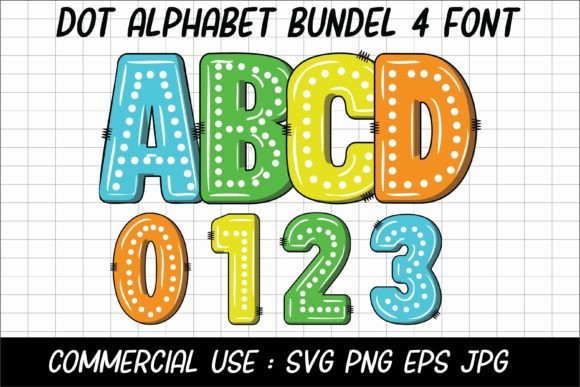
Dot Alphabet Font: Understanding The Dots Alphabet – Braille
The world of typography and fonts is vast and diverse, with various styles and types catering to different needs and purposes. Among these, the dot alphabet font, commonly known as Braille, holds a unique place. It is a tactile writing system used by people who are visually impaired, invented by Louis Braille in the early 19th century. Braille uses patterns of raised dots to represent letters, numbers, and punctuation marks, enabling individuals to read and write through touch.
The Origins and Structure of Braille
Louis Braille, who lost his sight at the age of 3, developed this system to facilitate literacy and communication for the visually impaired. The Braille system is based on a cell that contains up to six dots, arranged in a rectangular grid with two columns and three rows. Each character in Braille is defined by a specific arrangement of these dots. For instance, the letter “A” is represented by a single raised dot in the upper-left corner of the cell.

Figure 1: Structure of a Braille Cell
Reading and Writing Braille
Braille can be written using a slate and stylus, which allows for the manual creation of dot patterns. It can also be produced with a Braille typewriter or an electronic Braille display for digital text. The method of writing Braille enables individuals to produce and read materials independently. This independence is crucial for literacy and communication, providing visually impaired individuals with the ability to engage with written content in various contexts.
Versions of Braille
There are different versions of Braille tailored for various languages and purposes. For English, there are Grade 1 (uncontracted Braille) and Grade 2 (contracted Braille). Grade 1 Braille represents each letter of the alphabet with a unique Braille cell, similar to the alphabet. Grade 2 Braille, on the other hand, uses contractions and combines letters to represent common letter combinations and words, making it more efficient for reading and writing.
Beyond these, there are also specialized Braille codes for mathematical and musical notation. These codes extend the basic Braille system to include symbols and notations specific to mathematics and music, enabling visually impaired individuals to engage with these subjects at an advanced level.
| Grade | Description |
|---|---|
| Grade 1 | Uncontracted Braille, each letter of the alphabet is represented by a unique Braille cell. |
| Grade 2 | Contracted Braille, uses contractions and combines letters for common letter combinations and words. |
Table 1: Overview of Braille Grades
The Impact of Braille
The Braille system has been a vital tool for literacy and communication for blind and visually impaired individuals. It provides them with the ability to read books, labels, signs, and other written material independently. This independence is a critical factor in education, employment, and social interactions, contributing significantly to the quality of life and personal development of visually impaired individuals.
Challenges and Future Directions
Despite its importance, the Braille system faces challenges in the digital age. The increasing availability of digital content and the use of assistive technologies have transformed how visually impaired individuals access information. While Braille remains essential, there is a need for continued support and innovation to ensure its relevance and accessibility.
Efforts to preserve and promote Braille literacy include educational programs, advocacy, and technological innovations. For instance, electronic Braille displays and Braille e-book readers are making it easier for individuals to access digital content in Braille. Moreover, there is a growing emphasis on teaching Braille in schools and communities to ensure that visually impaired individuals have the literacy skills they need to succeed.
Dot Alphabet Font: Access Download Now
| Font Name | Dot Alphabet Font |
| Author | CHEETAH DOODLE |
| Download | Access Download Here |
Conclusion
The dot alphabet font, known as Braille, is a remarkable example of innovation and inclusivity. Its development by Louis Braille has had a profound impact on the lives of visually impaired individuals, providing them with a means of literacy and communication. As technology continues to evolve, the importance of Braille remains unchanged, serving as a vital tool for independence and engagement with the world.
