
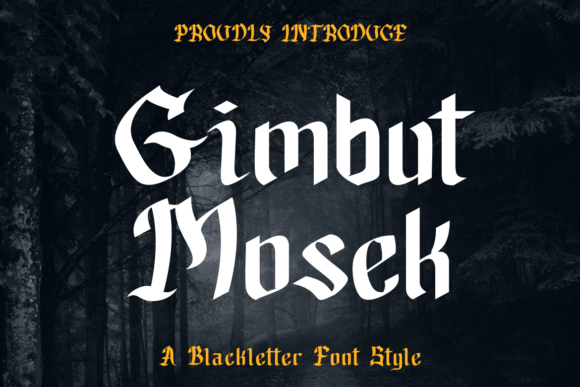
Gimbut Mosek Font: A Bold and Thick Lettered Blackletter Font
In the world of typography, fonts play a crucial role in conveying the tone and personality of a design project. Whether you’re working on a logo, a website, or a print material, the right font can make all the difference. If you’re looking for a bold and thick lettered blackletter font that can add a touch of elegance and sophistication to your projects, look no further than Gimbut Mosek.
What is Gimbut Mosek?
Gimbut Mosek is a bold and thick lettered blackletter font that is perfect for designers who want to add a touch of luxury and refinement to their projects. This font is designed to be highly legible, even at small sizes, making it ideal for use in a variety of applications, from headlines and titles to body text and captions.
📸 Preview Images


💡 Click on any image to view full size
Key Features of Gimbut Mosek
So, what sets Gimbut Mosek apart from other fonts? Here are some of its key features:
- Bold and Thick Lettering: Gimbut Mosek is a blackletter font with bold and thick lettering that is sure to grab attention.
- PUA Encoded: This font is PUA (Private Use Area) encoded, which means that you can access all of the glyphs and swashes with ease.
- Highly Legible: Despite its bold and thick lettering, Gimbut Mosek is highly legible, even at small sizes.
- Versatile: This font can be used in a variety of applications, from logos and headlines to body text and captions.
Benefits of Using Gimbut Mosek
So, why should you choose Gimbut Mosek for your design projects? Here are some of the benefits of using this font:
- Adds Elegance and Sophistication: Gimbut Mosek’s bold and thick lettering adds a touch of elegance and sophistication to any design project.
- Improves Readability: This font’s high legibility ensures that your text is easy to read, even at small sizes.
- Increases Versatility: Gimbut Mosek can be used in a variety of applications, making it a versatile addition to your font library.
- Easily Accessible Glyphs and Swashes: The PUA encoding of Gimbut Mosek makes it easy to access all of the glyphs and swashes, allowing you to customize your text to suit your needs.
How to Use Gimbut Mosek
Using Gimbut Mosek is easy. Here are the steps to follow:
- Download and Install: Download the Gimbut Mosek font file and install it on your computer.
- Select the Font: Select Gimbut Mosek as the font for your design project.
- Access Glyphs and Swashes: Use the PUA encoding to access all of the glyphs and swashes.
- Customize Your Text: Customize your text to suit your needs, using the various glyphs and swashes available.
Tips and Tricks for Getting the Most Out of Gimbut Mosek
Here are some tips and tricks for getting the most out of Gimbut Mosek:
- Use it for Headlines and Titles: Gimbut Mosek is perfect for use in headlines and titles, where its bold and thick lettering can really make an impact.
- Experiment with Different Sizes: Don’t be afraid to experiment with different sizes of Gimbut Mosek. Its high legibility ensures that it will remain clear and readable even at small sizes.
- Combine it with Other Fonts: Gimbut Mosek can be combined with other fonts to create a unique and interesting design.
Gimbut Mosek Font: Access Download Now
| Font Name | Gimbut Mosek Font |
| Author | Unknown |
| Download | Access Download Here |
Conclusion
In conclusion, Gimbut Mosek is a bold and thick lettered blackletter font that is perfect for designers who want to add a touch of elegance and sophistication to their projects. With its PUA encoding, highly legible lettering, and versatility, Gimbut Mosek is a great addition to any font library. Whether you’re working on a logo, a website, or a print material, Gimbut Mosek is sure to impress.
FAQs
- Q: What is Gimbut Mosek?
- A: Gimbut Mosek is a bold and thick lettered blackletter font.
- Q: What is PUA encoding?
- A: PUA encoding is a way of encoding fonts that allows for easy access to glyphs and swashes.
- Q: What can I use Gimbut Mosek for?
- A: Gimbut Mosek can be used for a variety of applications, including logos, headlines, body text, and captions.
