
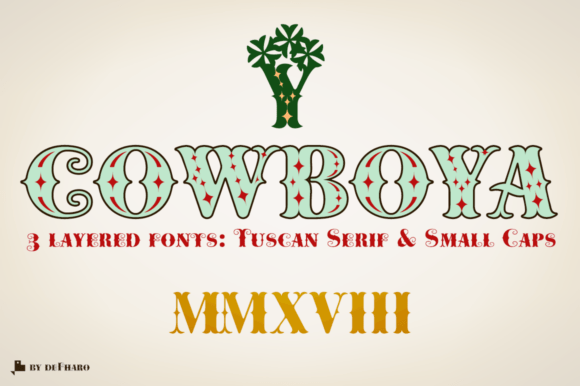
Cowboya Font: A Unique Tuscan Serif Typeface with a Festive Twist
In the world of typography, there exist countless fonts that cater to various design needs. One such font that stands out from the rest is Cowboya, a decorative and layered typeface inspired by the classic titles of old Western movies and Italian posters. In this article, we’ll delve into the world of Cowboya, exploring its unique features, design inspiration, and the creative possibilities it offers.
What is Cowboya Font?
Cowboya is a typography with concave Tuscan serif, characterized by high contrast and modernist inspiration. The font features letters in small caps, with three versions that can be used by superimposed layers, resulting in multicolored typographic titles. This unique feature allows designers to create visually striking and dynamic text displays that are sure to grab attention.
Design Inspiration
The design of Cowboya was inspired by the credit titles used in the 1950 black film directed by Fritz Lang, “The House of the River.” The creator of Cowboya drew from the original forms of the letters and added decorative elements to give the font a festive character. This blend of classic and playful elements makes Cowboya a standout in the world of typography.
Historical Context: Tuscan Serif Typefaces
Tuscan serif typefaces have a rich history dating back to the 19th century in Italy. These decorative fonts were traditionally used in large headlines and posters, particularly in circus shows, carnivals, and American Far West environments. The style was popularized by its use in advertising and promotional materials, where it added a touch of drama and flair.
Unique Features of Cowboya
Cowboya boasts several unique features that set it apart from other typefaces:
- Concave Tuscan serifs: Cowboya’s serifs are concave, providing a distinctive and elegant touch to the font.
- High contrast: The font features high contrast between thick and thin lines, creating a visually appealing effect.
- Modernist inspiration: Cowboya’s design draws from modernist principles, giving it a fresh and contemporary feel.
- Decorative elements: The font includes decorative elements that add a festive touch, making it perfect for use in titles, headings, and promotional materials.
- Layered versions: Cowboya comes in three versions that can be used by superimposed layers, allowing designers to create multicolored typographic titles.
Rounded Joints and Counterforms
To create a contrast with the sharp Tuscan serifs, the designer of Cowboya rounded the sharper joints of the antlers and counterforms. This thoughtful design decision brings a modern, techno-inspired background to the font, softening its overall appearance.
Creative Possibilities with Cowboya
Cowboya’s unique features and design inspiration make it an excellent choice for various design projects:
- Posters and flyers: Cowboya’s decorative and festive nature makes it perfect for use in posters and flyers for events, concerts, and festivals.
- Logos and branding: The font’s distinctive style can help create memorable logos and branding materials for businesses and organizations.
- Headings and titles: Cowboya’s layered versions allow designers to create eye-catching headings and titles for publications, websites, and digital media.
- Advertising and marketing: The font’s bold and attention-grabbing style makes it suitable for use in advertising and marketing materials.
Cowboya Font: Access Download Now
| Font Name | Cowboya Font |
| Author | Unknown |
| Download | Access Download Here |
Conclusion
Cowboya is a one-of-a-kind typeface that combines the elegance of Tuscan serifs with a festive and modern twist. Its unique features, design inspiration, and creative possibilities make it an excellent addition to any designer’s toolkit. Whether you’re working on a poster, logo, or heading, Cowboya is sure to add a touch of drama and flair to your project.
Technical Specifications
- Font family: Cowboya
- Font style: Tuscan serif
- Font size: Various
- Language support: Multilingual
- Layers: 3 versions for superimposed layers
