
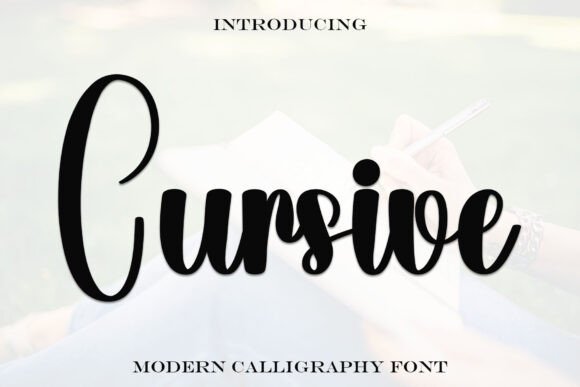
Cursive Font: Elevate Your Design with Timeless Elegance
Cursive is a trendy handwritten font with a contemporary atmosphere and impeccable form, inspired by timeless classic calligraphy. It will add elegance and class to any of your design projects. In this article, we’ll explore the world of cursive fonts, their history, and the impact they can have on your designs.
The History of Cursive Fonts
Cursive fonts have been around for centuries, with their origins dating back to the Middle Ages. The word “cursive” comes from the Latin “cursivus,” meaning “running.” This refers to the flowing, connected letters that characterize cursive writing. Over time, cursive fonts have evolved, influenced by various calligraphy styles and cultural movements.
In the 18th and 19th centuries, cursive fonts became popular in Europe and the United States, particularly in formal documents, such as invitations, certificates, and letters. The Spencerian script, developed in the 1850s, was a highly influential cursive style that emphasized flowing connections and elegant letterforms.
The Resurgence of Cursive Fonts
In recent years, cursive fonts have experienced a resurgence in popularity, driven by the growing interest in hand-drawn and handwritten typography. With the rise of digital design, cursive fonts have become more accessible and versatile, allowing designers to experiment with a wide range of styles and applications.
Cursive fonts are now used in various design contexts, from branding and advertising to packaging and digital media. They add a touch of elegance, sophistication, and personality to any design project, making them a popular choice among designers and marketers.
Characteristics of Cursive Fonts
Cursive fonts are characterized by their flowing, connected letters, which create a sense of movement and fluidity. Some common features of cursive fonts include:
- Connected letters: Cursive fonts often feature letters that are connected by strokes or flourishes.
- Flowing lines: Cursive fonts typically have smooth, flowing lines that create a sense of movement.
- Elegant letterforms: Cursive fonts often feature elegant, refined letterforms with subtle curves and swashes.
- Variations in line width: Cursive fonts often exhibit variations in line width, creating a sense of expressiveness and hand-drawn feel.
The Benefits of Using Cursive Fonts
Cursive fonts offer several benefits for designers and marketers, including:
- Elegance and sophistication: Cursive fonts add a touch of elegance and sophistication to any design project.
- Personality and character: Cursive fonts can convey a sense of personality and character, making them ideal for brands that want to stand out.
- Emotional connection: Cursive fonts can create an emotional connection with the audience, evoking feelings of nostalgia, warmth, and intimacy.
- Versatility: Cursive fonts can be used in various design contexts, from digital media to print materials.
Cursive Font in Digital Design
Cursive fonts are widely used in digital design, particularly in:
- Branding and logos: Cursive fonts are popular for logos and branding, as they can create a sense of elegance and sophistication.
- Digital advertising: Cursive fonts are often used in digital advertising, such as display ads, social media graphics, and email marketing campaigns.
- Web design: Cursive fonts can add a touch of elegance and personality to web design, particularly in headers, titles, and navigation menus.
- Mobile apps: Cursive fonts are used in mobile apps, such as games, productivity apps, and social media apps.
Best Practices for Using Cursive Fonts
To get the most out of cursive fonts, follow these best practices:
- Choose a clear and legible font: Ensure that your cursive font is clear and legible, particularly for body text.
- Use font sizes wisely: Use font sizes that are consistent with the design context and the intended audience.
- Pay attention to line spacing: Ensure that line spacing is sufficient to create a clear and readable text.
- Combine with other fonts: Combine cursive fonts with other fonts to create visual interest and hierarchy.
Cursive Font: Access Download Now
| Font Name | Cursive Font |
| Author | Unknown |
| Download | Access Download Here |
Conclusion
Cursive fonts are a timeless and elegant choice for designers and marketers. With their flowing lines, connected letters, and elegant letterforms, cursive fonts can add a touch of sophistication and personality to any design project. By understanding the history, characteristics, and benefits of cursive fonts, designers can harness their creative potential and create stunning designs that engage and inspire audiences.
Additional Resources
For more information on cursive fonts and typography, check out these resources:
- Font libraries: Explore font libraries, such as Google Fonts, Adobe Fonts, and Font Squirrel, for a wide range of cursive fonts.
- Typography blogs: Visit typography blogs, such as The Futur, Smashing Magazine, and Typography Hub, for inspiration and insights on typography and font design.
- Design communities: Join design communities, such as Behance, Dribbble, and Reddit, to connect with other designers and learn from their experiences.
